Minister Kabanda Commits Support for Makerere Research on Urban Expansion and Water Scarcity in Greater Kampala
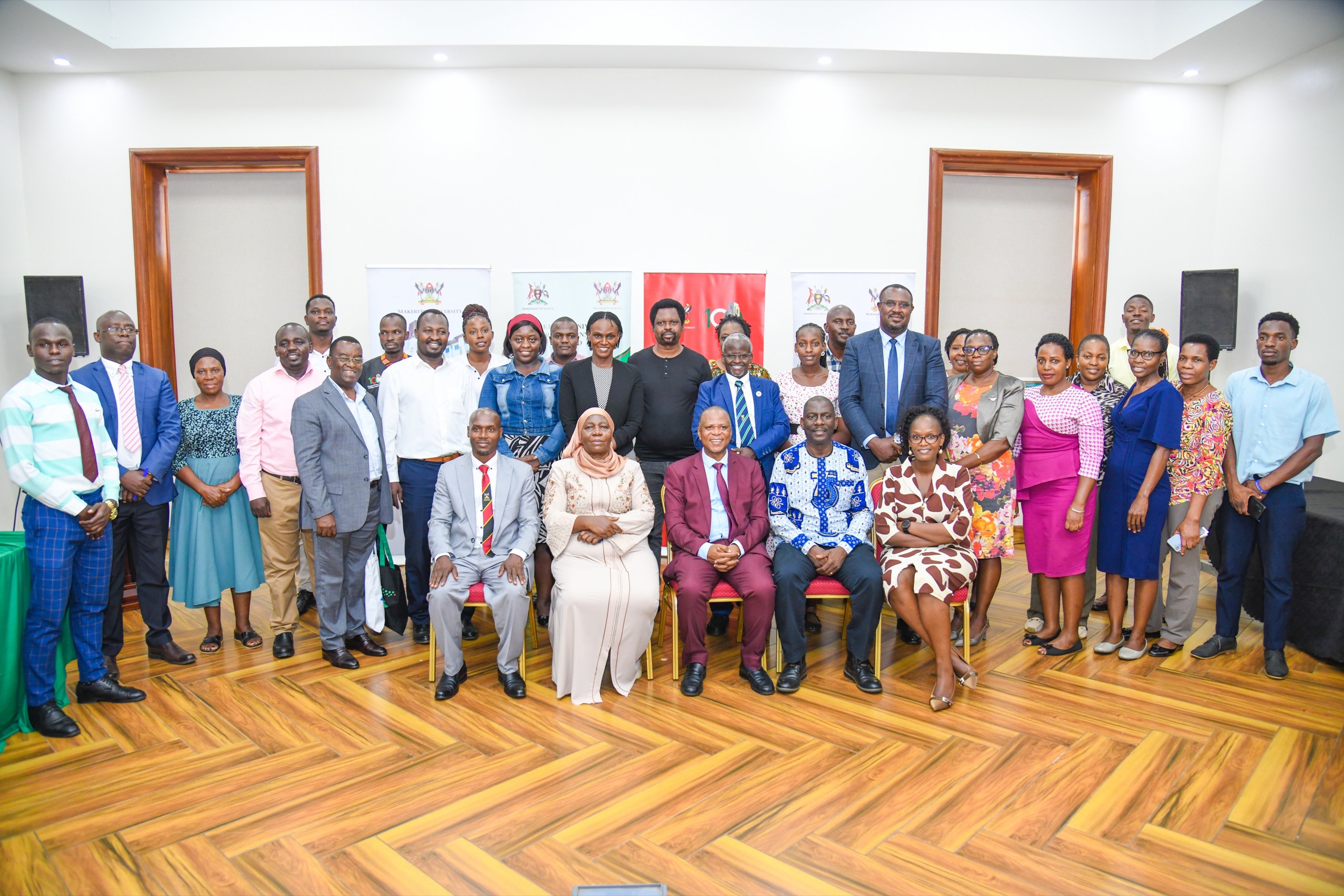
Government investment in research through the Makerere University Research and Innovations Fund (Mak-RIF) took centre stage as researchers shared evidence to guide urban planning and address water scarcity in the Greater Kampala Metropolitan Area. Hon. Minsa Kabanda, Minister for Kampala City and Metropolitan Affairs, graced the dissemination of the study on “Urban Expansion Patterns and Water Scarcity in Greater Metropolitan Kampala: A Prediction Model,” led by Principal Investigator Dr. Nestor Mugabe.
Her attendance brought an important policy voice to the discussion, creating an opportunity to connect the research with institutions responsible for planning and service delivery across the metropolitan area. Makerere University and the research team warmly appreciated the Minister for making time to engage with the findings and consider their practical application.
Beyond attending the session, Hon. Kabanda expressed her commitment to further supporting the project by taking forward its recommendations through the Kampala Capital City Authority (KCCA) and her Ministry. This commitment provided an encouraging pathway for continued engagement between the researchers and government, with the aim of translating the study’s recommendations into planning and action.
Government funding supporting locally relevant solutions
The dissemination highlighted the importance of Government of Uganda funding through Mak-RIF in enabling researchers to investigate pressing national challenges and develop evidence to inform solutions.
Support for this study demonstrates the value of investing in Ugandan researchers to address the development needs of Ugandan communities. By examining the relationship between urban expansion and water scarcity, the project contributes knowledge that can help guide decisions about the growth of Greater Kampala and the services its residents require.
The Government deserves appreciation for sustaining a funding mechanism that connects university expertise with national priorities. Through Mak-RIF, public investment creates opportunities for researchers to move from identifying problems to developing tools and recommendations that government institutions can consider in their work.
Hon. Kabanda’s commitment to taking forward the recommendations reinforced the significance of this investment. It offered a valuable link between government support for research and government engagement in applying its results.
Prof. Moses Musinguzi, Principal of the College of Engineering, Design, Art and Technology (CEDAT), who served as Acting Vice Chancellor at the session, commended Dr. Mugabe and his team for providing timely information on the spatial expansion of the city.
His appreciation underscored the importance of understanding how the metropolitan area is growing and what that growth means for infrastructure and essential services. As settlements expand, evidence about their location and development patterns can help planners consider where services will be needed and how investments should be prioritised.
The study’s predictive approach contributes to this discussion by offering a basis for anticipating urban expansion and considering its implications for water provision. Its potential usefulness lies in helping decision-makers plan ahead and respond more effectively to emerging needs.
Hon. Kabanda’s commitment to supporting the project through KCCA and her Ministry was a significant outcome of the dissemination. It created an opening for the research team to engage further with the institutions positioned to assess and take forward the recommendations.
Her participation also carried a broader message of national responsibility. The Minister urged guests to love Uganda and work towards achieving the country’s national development goals.
Her appeal connected the day’s research discussion to a shared duty: using knowledge, professional expertise and public service to contribute to Uganda’s progress. For researchers and public institutions alike, it was a reminder that the value of their work ultimately rests in its contribution to the country and the wellbeing of its people.
Dr. Nestor Mugabe and his research team were appreciated for bringing evidence on urban expansion and water scarcity into a forum where it could be discussed with government leadership and university representatives.
Prof. Julius Kikooma represented the Directorate of Research, Innovations and Partnerships (DRIP), while Ms. Grace Cherotich Ruto represented the Mak-RIF Grants Management Committee. Their participation reflected the institutional support that helps research progress towards dissemination and uptake.
Prof. William Tayeebwa of Makerere University Press served as Master of Ceremonies, guiding the proceedings and facilitating the exchange among participants.
The session demonstrated the importance of bringing research funding, academic expertise and policy leadership into the same conversation. Government funding through Mak-RIF enabled the investigation; the research team contributed evidence; and the Minister’s commitment opened a pathway for further consideration of the recommendations.
Makerere University and Mak-RIF sincerely appreciate Hon. Minsa Kabanda for her time, her commitment to supporting the project, and her call for collective effort towards Uganda’s national development goals. Appreciation also goes to the Government of Uganda for investing in research, to Prof. Musinguzi for recognising the timeliness of the work, and to Dr. Mugabe and his team for contributing knowledge that can inform the future of Greater Kampala.