Makerere Study Reveals Why Ugandan Students Struggle in Biology, Calls for Urgent Reforms
A new study examining the persistent poor performance in Biology in Uganda’s national examinations has identified systemic challenges across the country’s education system, calling for urgent policy and classroom-level reforms.
The research highlights that although Biology is a critical subject underpinning careers in medicine, agriculture, and environmental science, many learners at both Ordinary and Advanced levels continue to underperform.
According to the findings, poor performance is driven by a combination of factors, including limited practical learning, inadequate laboratory facilities, ineffective teaching methods, socio-economic barriers, and misalignment between the curriculum and examination formats.
Regional disparities exposed
The study reveals that challenges vary significantly across regions:
Despite relatively better infrastructure in Central Uganda, students face low engagement, limited participation in academic enrichment activities, and insufficient access to digital and practical learning opportunities such as field visits.
Schools in Eastern Uganda struggle with severe shortages of learning materials, including specimens and laboratory equipment, alongside poor internet access. Teaching is largely theoretical, with minimal hands-on experience.
Northern Uganda faces the most acute challenges, including limited field-based learning opportunities, poor internet connectivity, low student motivation, and weak study habits.
In Western Uganda, a lack of field excursions and limited access to digital learning resources were identified as major constraints, coupled with moderate student engagement and limited project-based learning.
System-level gaps identified

Beyond classroom challenges, the study points to institutional weaknesses, particularly a lack of coordination between the National Curriculum Development Centre (NCDC) and the Uganda National Examinations Board (UNEB).
While NCDC is responsible for developing the curriculum, UNEB independently sets examinations with limited collaboration. Researchers led by Prof. Fredrick Muyodi note that, unlike subjects such as Physics and Chemistry, Biology lacks a structured process in which curriculum experts review examination content, leading to inconsistencies between what is taught and what is tested.
Mrs. Juliet Muzoora, the Commissioner for Secondary School Education at the Ministry of Education and Sports, however, noted that there is strong synergy and cohesion between UNEB and NCDC. “They are blended and hence provide a curriculum that is well developed and well assessed,” she said.
The study further found that Biology teaching in Uganda remains largely theoretical, with minimal emphasis on practical experiments, inquiry-based learning, or digital instruction, despite the country’s shift toward competence-based education.
Key recommendations
The researchers propose a series of reforms aimed at improving Biology education outcomes:
- Strengthen practical and experiential learning: Researchers urge the Ministry of Education and Sports to institutionalize and fund fieldwork, laboratory experiments, and project-based learning across all schools, particularly in underserved regions.
- Expand digital access: Researchers also recommend investment in affordable internet, digital devices, and online learning resources, especially in Eastern and Northern Uganda.
- Improve laboratory infrastructure: Schools should prioritize equipping and maintaining functional laboratories, including providing specimens, modern equipment, and simulations to support regular practical lessons.
- Enhance teacher capacity: Researchers call for continuous professional development programs that focus on learner-centered and inquiry-based teaching methods, while also addressing teacher shortages and workload imbalances.
- Boost student engagement: Schools are encouraged to strengthen academic clubs, mentorship programs, and independent study practices to improve learner motivation and participation.
- Promote community involvement: The study highlights the importance of parental and community support in shaping student attitudes toward Biology, particularly at lower secondary levels.
- Focus on girls’ participation: The report also raises concerns about gender disparities, noting that many female students perceive Biology as difficult and have limited participation in practical activities. To address this, the study recommends targeted interventions such as mentorship programs led by female scientists, girls-only academic support sessions, and structured opportunities for hands-on laboratory work.
Way forward

Researchers propose piloting targeted interventions in Northern and Eastern Uganda, focusing on improving digital access and practical learning. They also call for the establishment of a Monitoring, Evaluation, and Learning framework to track progress and guide nationwide implementation.
The research findings underscore the need for coordinated action among policymakers, educators, and stakeholders to transform Biology education in Uganda and better prepare students for science-based careers.
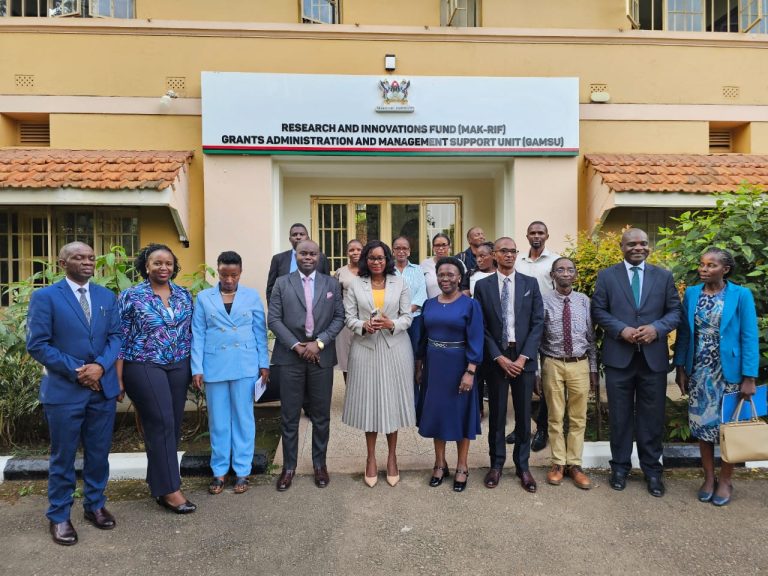
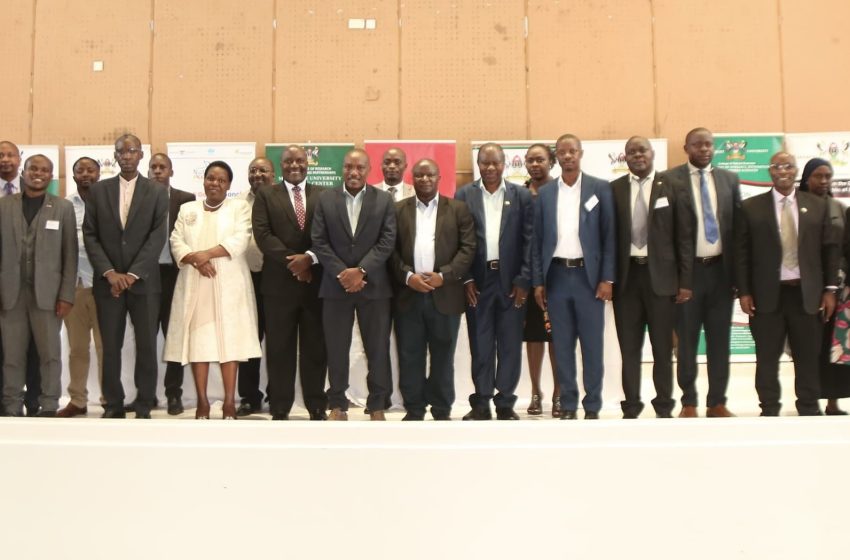
In his remarks, Prof. Fred Masagazi-Masaazi, Chairperson of the Mak-RIF Grants Management Committee, expressed hope that the project findings and recommendations will guide policymakers, educators, and other key stakeholders in designing effective interventions that strengthen the teaching and learning of Biology and improve outcomes for learners.
“It is our hope and expectation as Mak-RIF that the study findings will be extended to as many key stakeholders as possible,” he said. He also noted that Mak-RIF is committed to funding projects that meet Uganda’s priorities, including improving learner performance.
Mrs. Muzoora invited Prof. Muyodi to present the study to the Senior Management Team at the Ministry of Education and Sports in April 2026. She also noted that the Ministry was impressed by the findings and recommendations of another Mak-RIF-funded study which assessed the impact of salary enhancement on teacher performance in Uganda.
About the project
The project, titled “Examining the Factors Accounting for Poor Academic Performance in Biology in Uganda’s National Examinations,” is a needs-based project supported by the Government of Uganda through Mak-RIF.